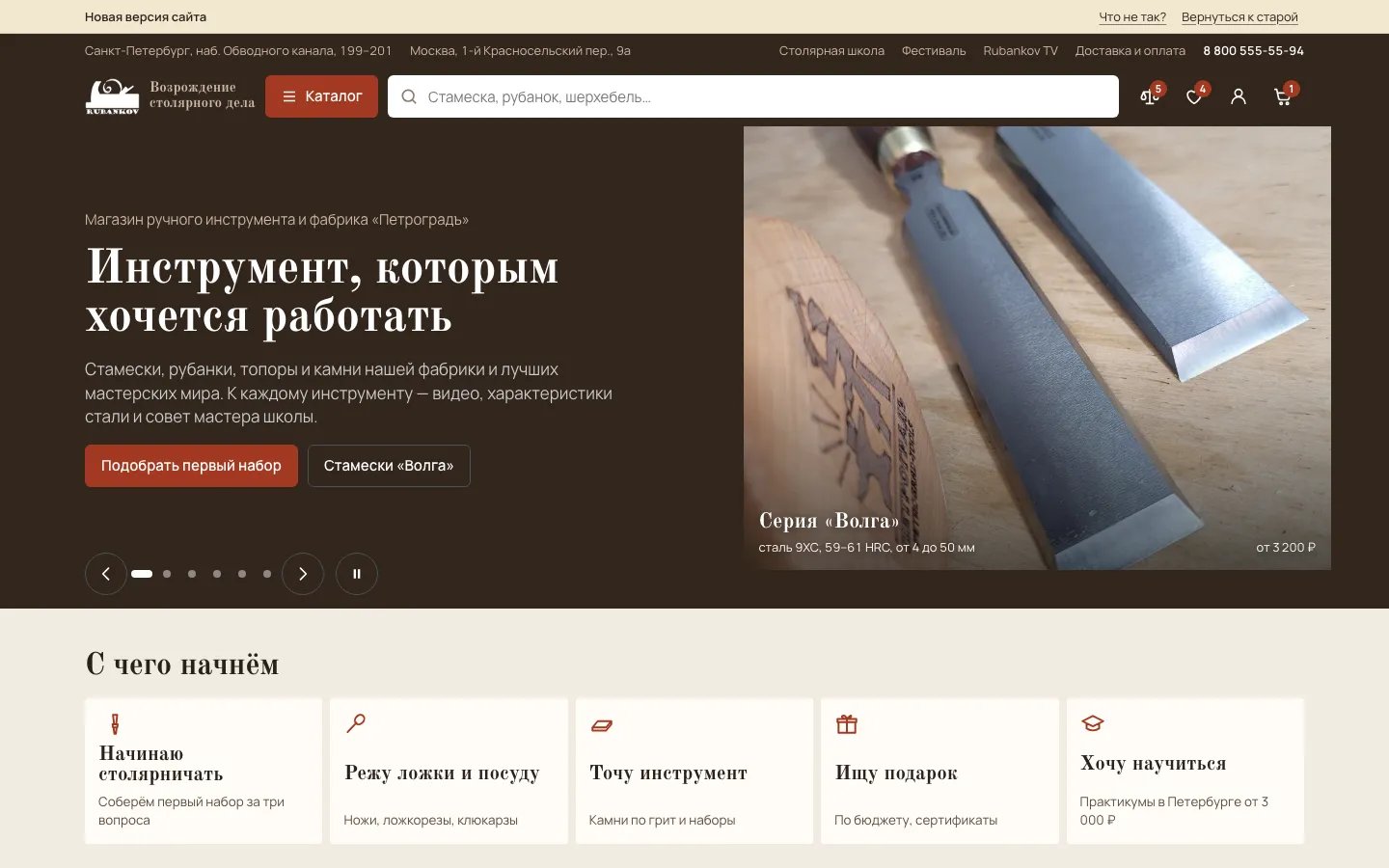
Home page: a workshop, not a warehouse
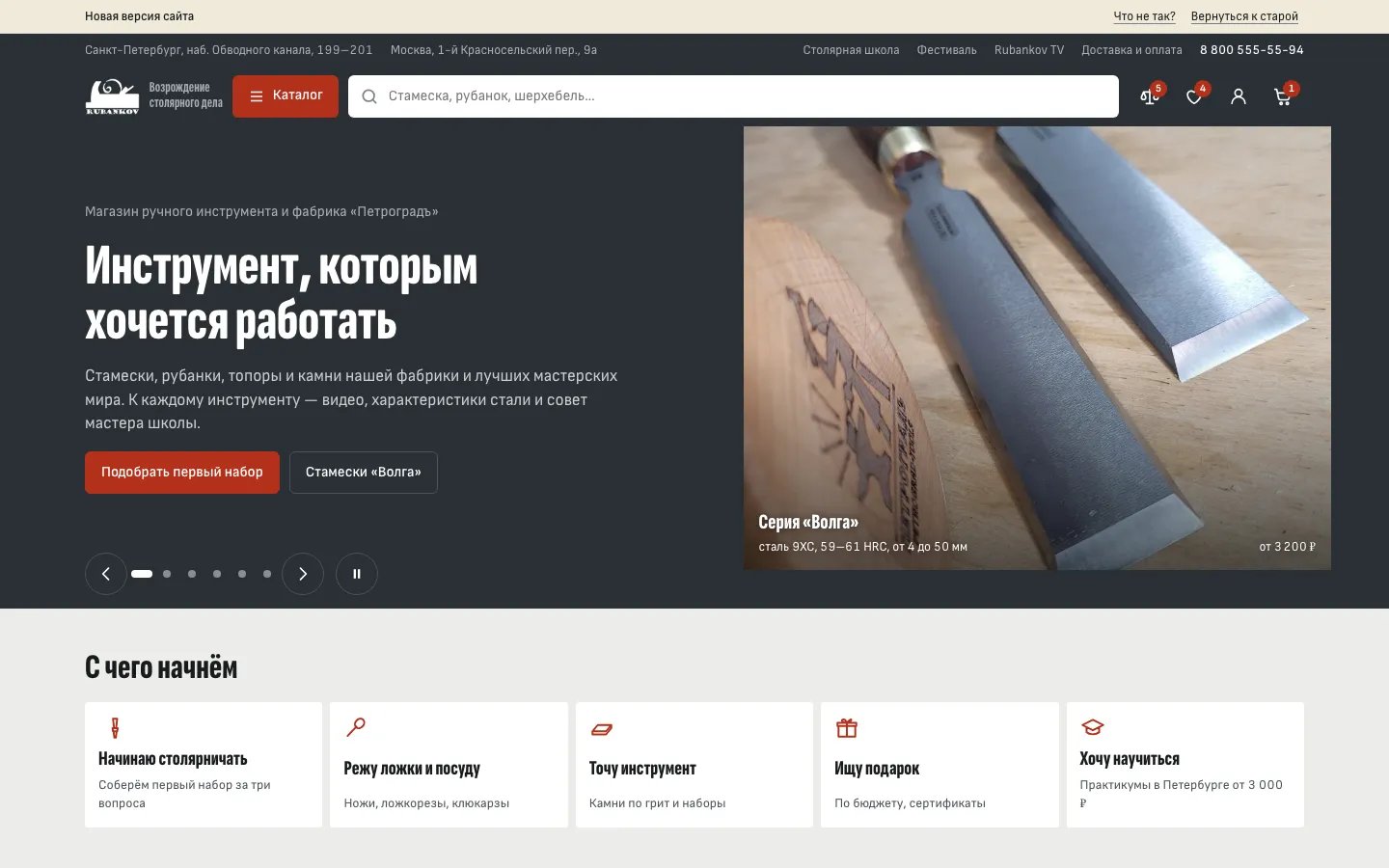
Customer tasks instead of news: “I'm starting woodworking”, “I carve spoons and bowls”, “I sharpen tools”, “I'm looking for a gift”, “I want to learn”. Below — new arrivals, school workshops, Rubankov TV videos, the festival and the factory.
Everyone finds their own way in, and the shop shows at once what sets it apart from a marketplace.
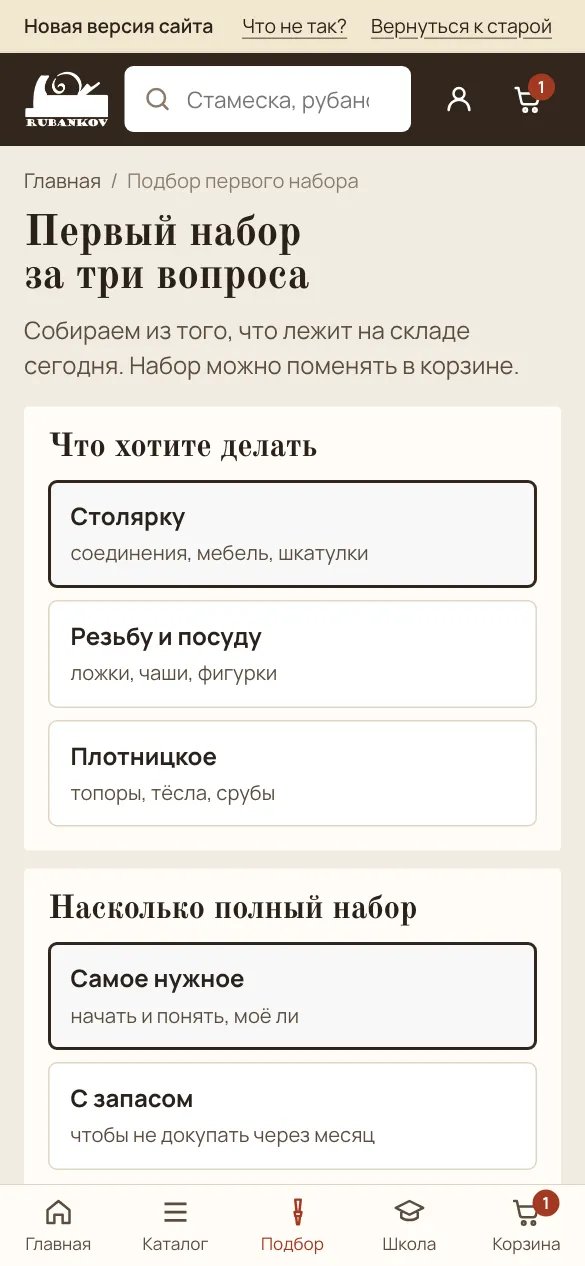
“I'm starting woodworking”: a first set in three questions
What do you want to do — joinery, carving and spoons, or carpentry; how complete a set you need; whether you already have something to sharpen with. The set is built from what is in stock today, with a “why this” note and a workshop sign-up next to it.
A beginner buys a first set without studying a hundred chisels.
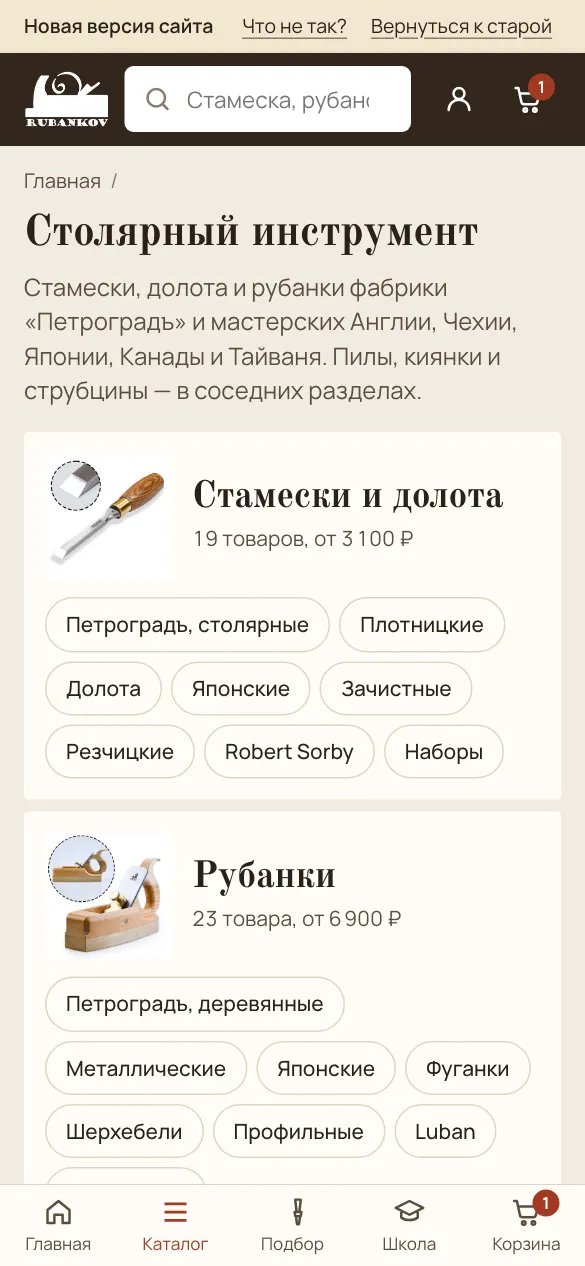
A catalogue of eight groups
Joinery, carving, sharpening, axes, marking, workbenches, finishing — eight groups instead of 34 sections. Each group shows subsections as chips with item counts, and a section opens with a short guide: “Not sure which width to start with?”.
The right shelf is a couple of taps away.
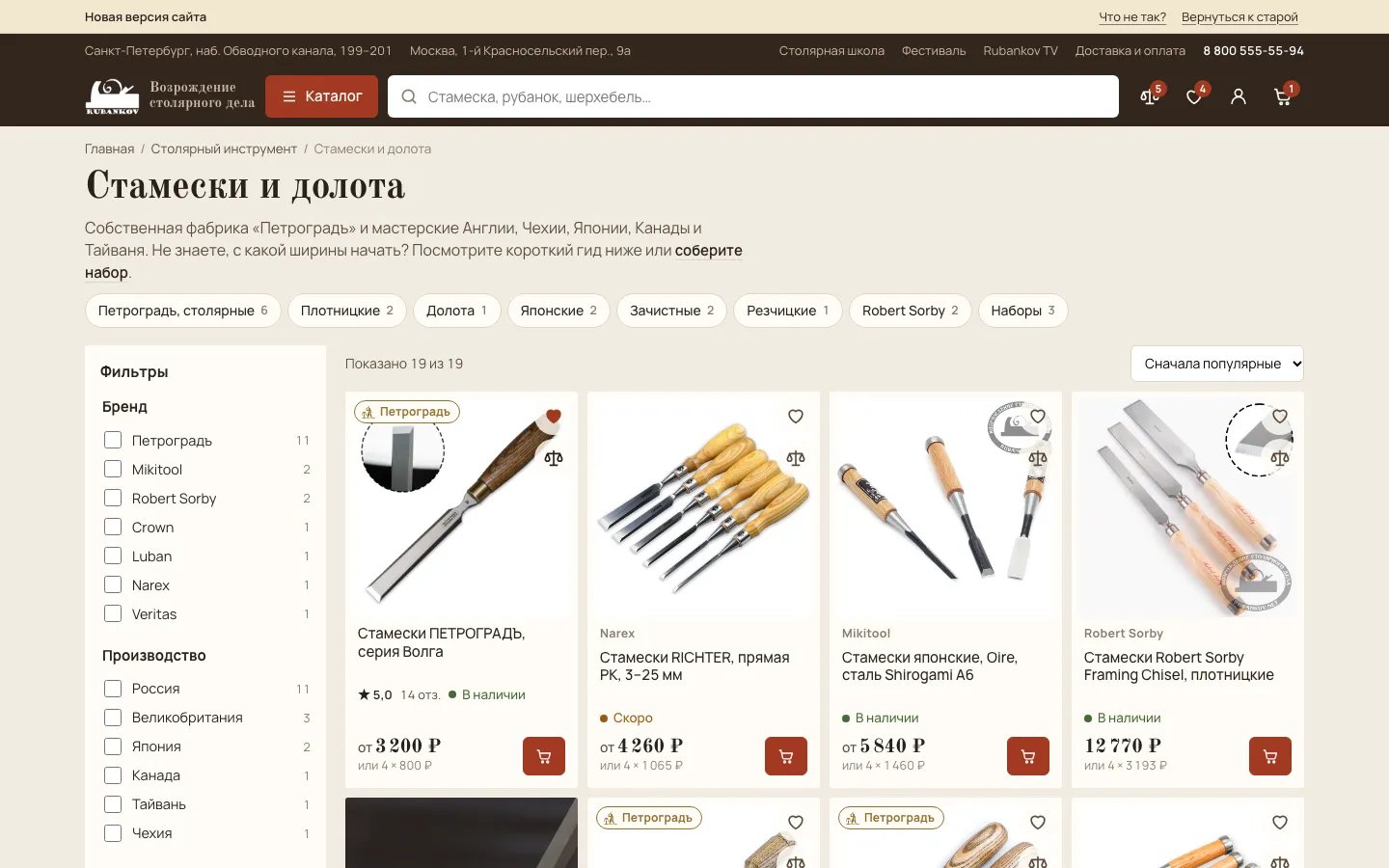
Filters built from specs
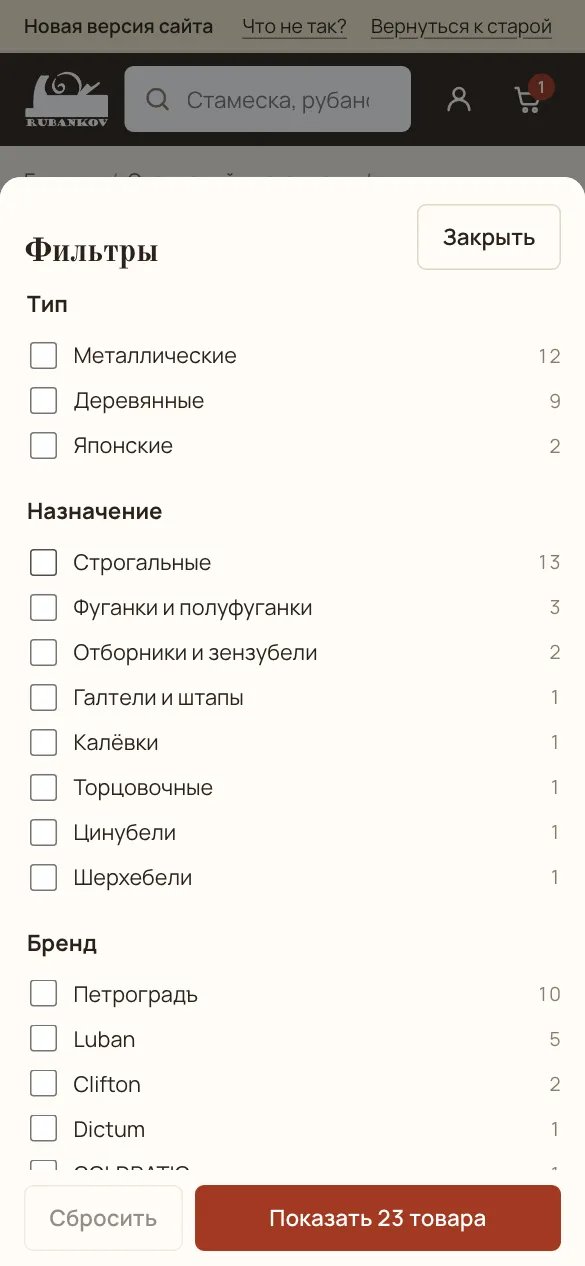
Each section has its own: planes filter by type, purpose (smoothing, jointer, rebate, round, moulding…) and brand with item counts. On a phone the filters open with a button; product tiles show price, stock and pay-in-parts.
A plane is found by the job, not by scrolling through all 23.
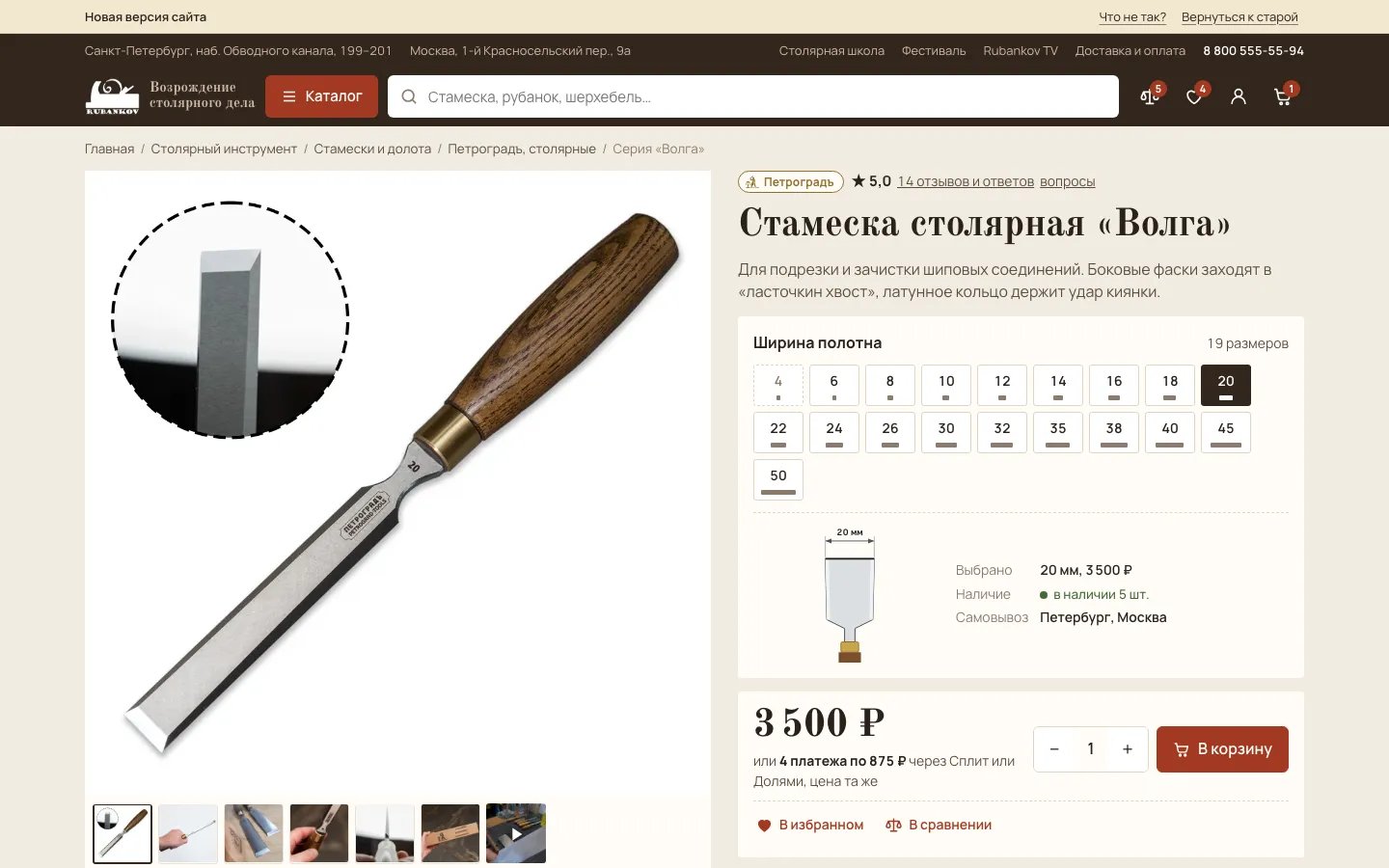
Volga chisel: the width on a drawing
19 widths as buttons, the selected one on a blade drawing, next to it its own price, stock and pick-up. When it is out of stock, the price stays and “Notify me” replaces “Add to cart”.
You see how 6 mm differs from 20 mm, and the customer stays even when a size is missing.
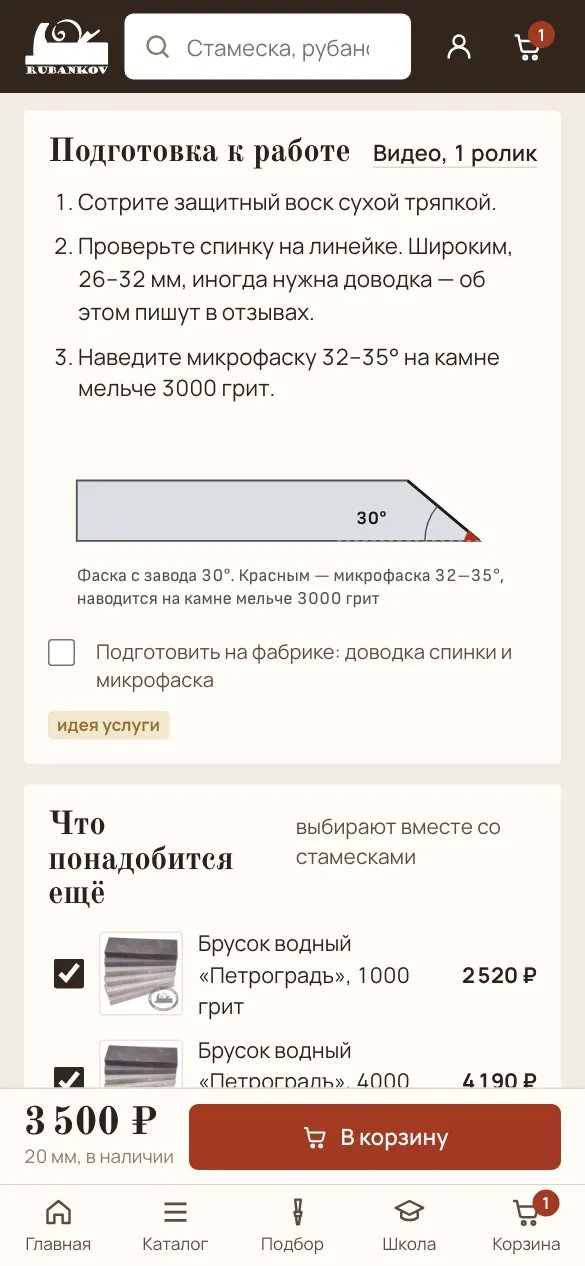
A card that teaches
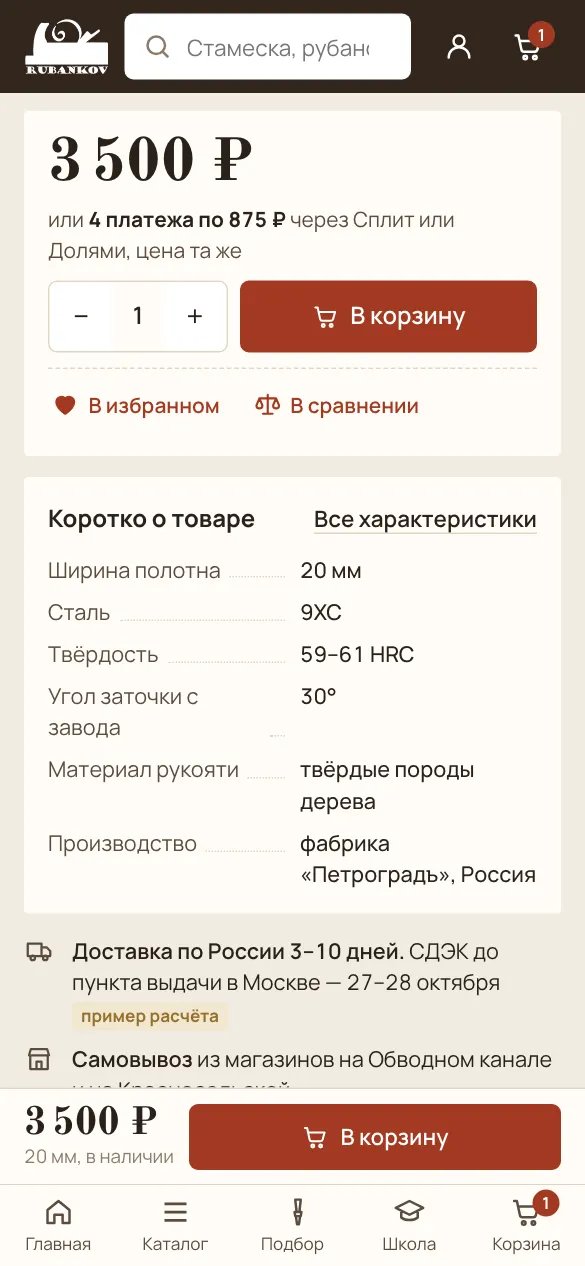
A video and a master's three steps to get the chisel ready, factory honing as a service, stones people buy with the chisel. Specs in a separate block: steel, hardness, bevel angle, handle, origin.
The card explains what the higher price pays for and offers what goes with it without pushing.
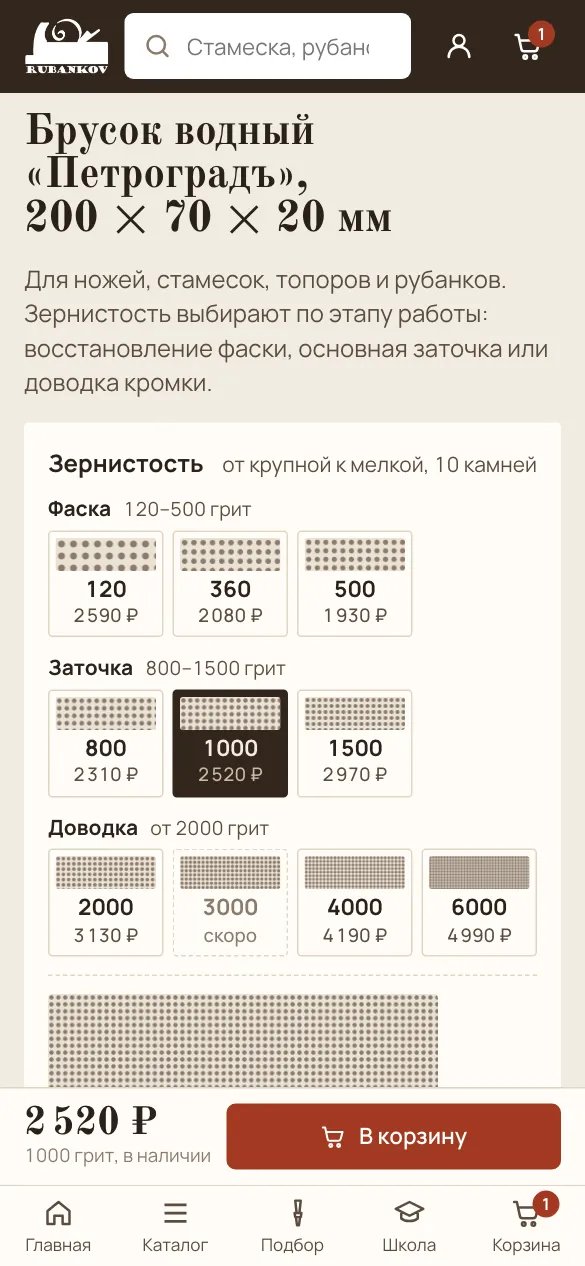
Stones: grit by sharpening stage
Ten stones on a coarse-to-fine scale split into stages: bevel, sharpening, honing.
A stone is chosen by the job, not by its grit number.
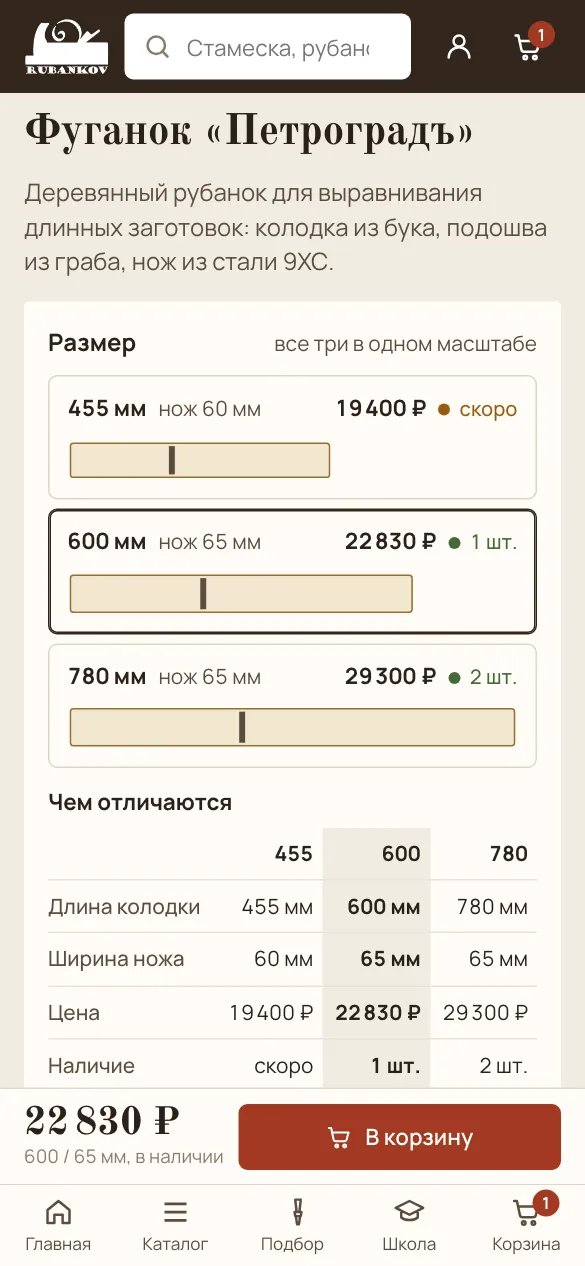
Jointer planes: sizes to one scale
Three versions — body and blade on one drawing, below a table of only what differs.
The difference in length is obvious without reading three descriptions.
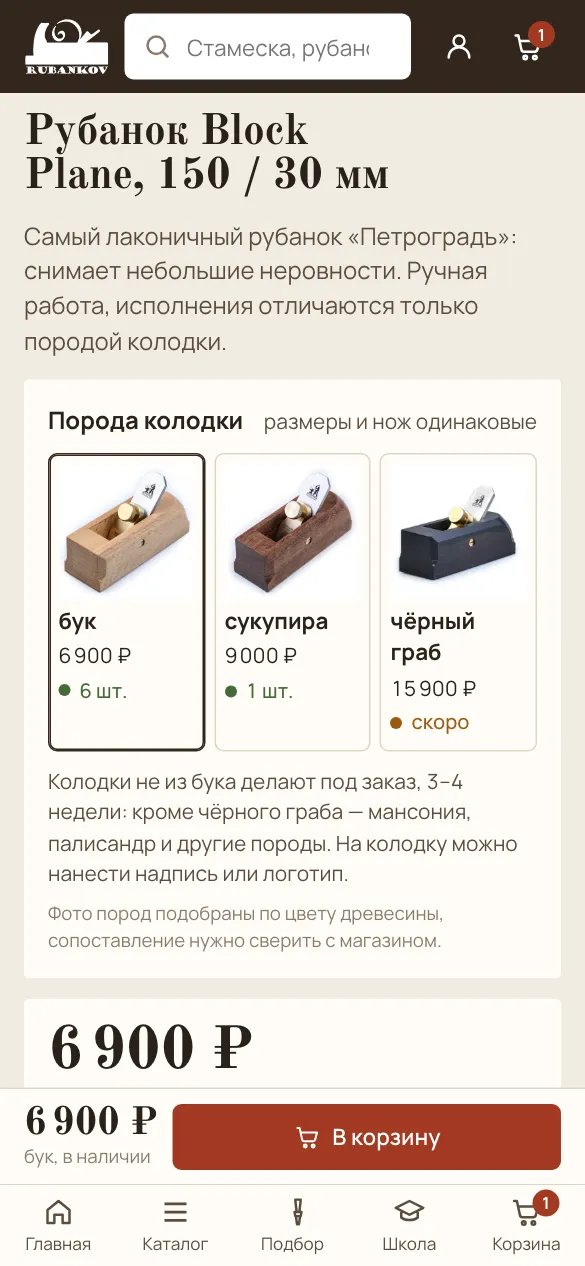
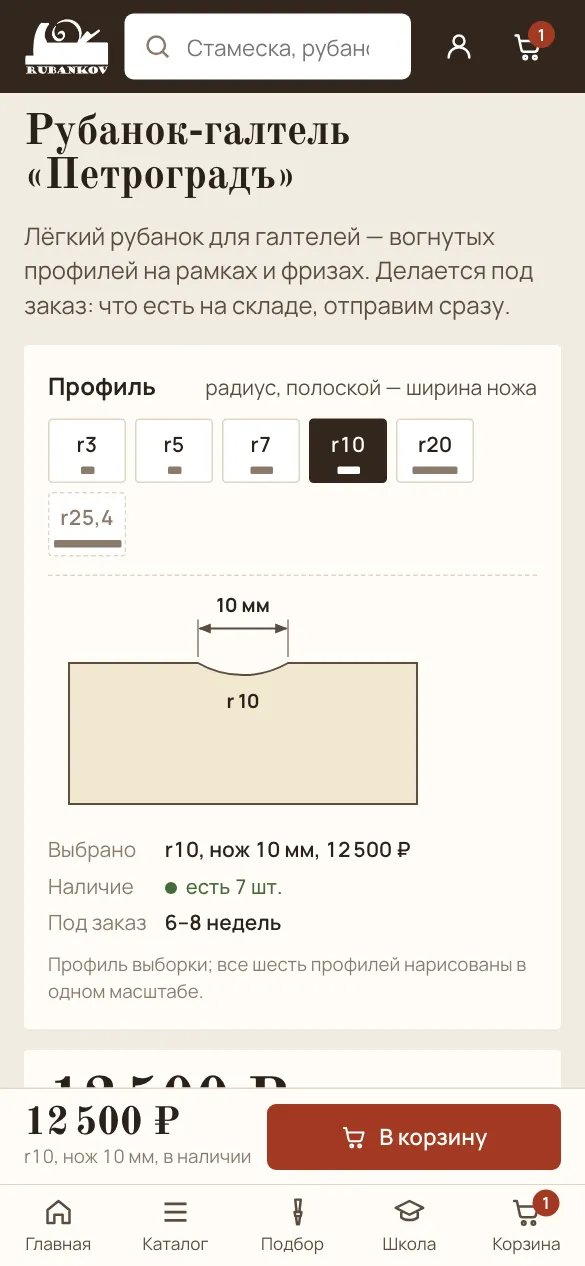
Block plane and round planes: wood and profile
The block plane comes in beech, sucupira and black hornbeam, with a photo, price and stock, other woods to order. Round planes have six radii with the cut profile drawn to scale, and honest stock: “7 in stock, then made to order in 6–8 weeks”.
Versions differ by what the eye sees, not by an article number.
Luban plane: no needless choice, and what fits
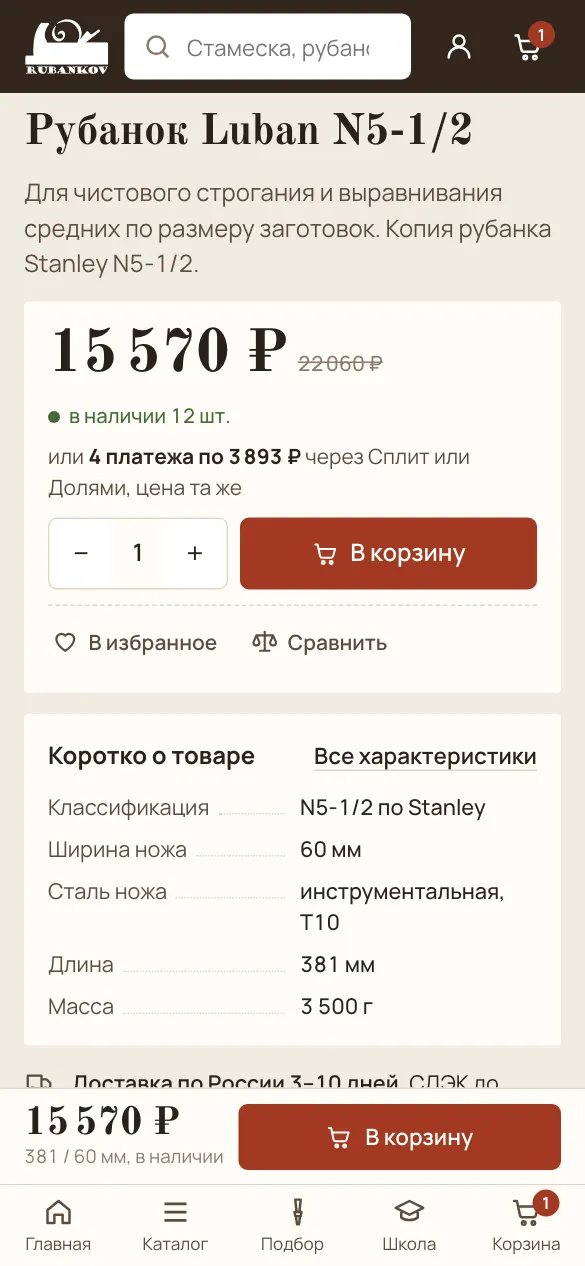
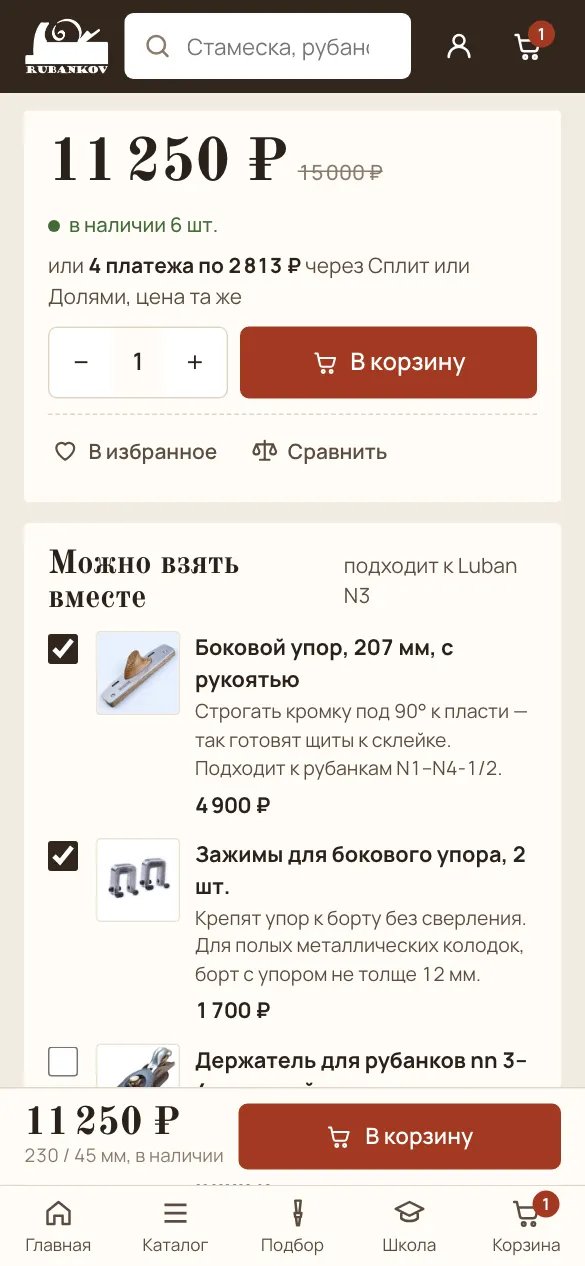
A simple product — price, stock, one button and specs from the description. Luban N3 gets “Take it together”: a 207 mm side fence, clamps, a holder and factory drilling, each with a line on why.
Compatible items don't get lost in description text.
Volga set: contents and savings
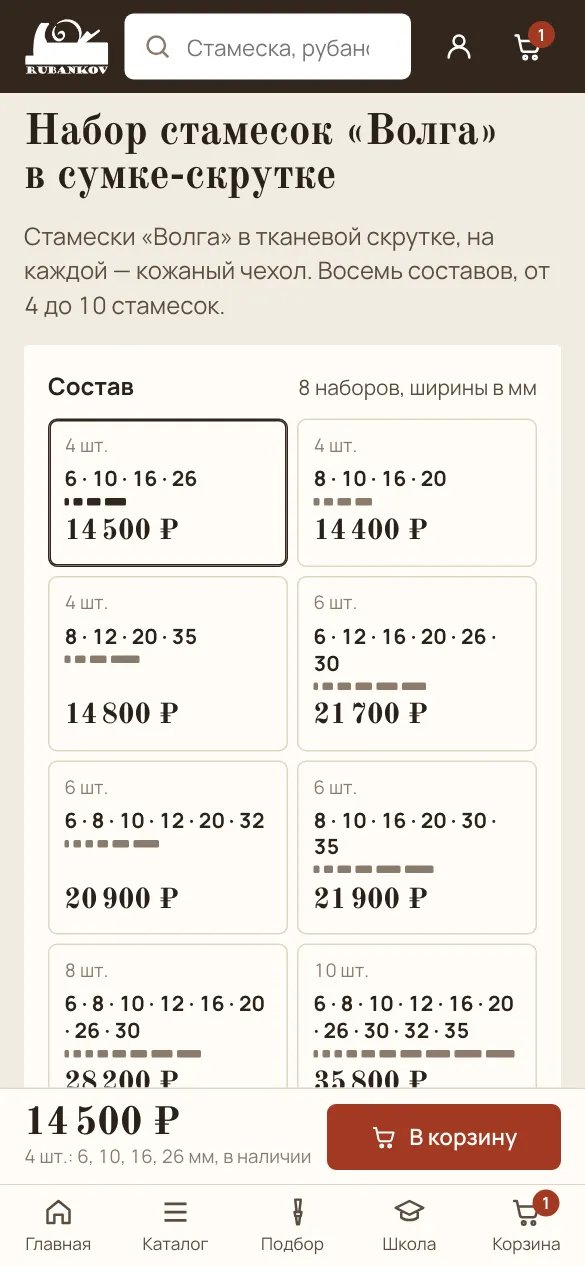
Eight compositions as chips with chisel widths, what each includes, and the maths: 16,140 ₽ separately, 14,500 ₽ as a set.
The savings are shown in numbers.
Comparison and favourites
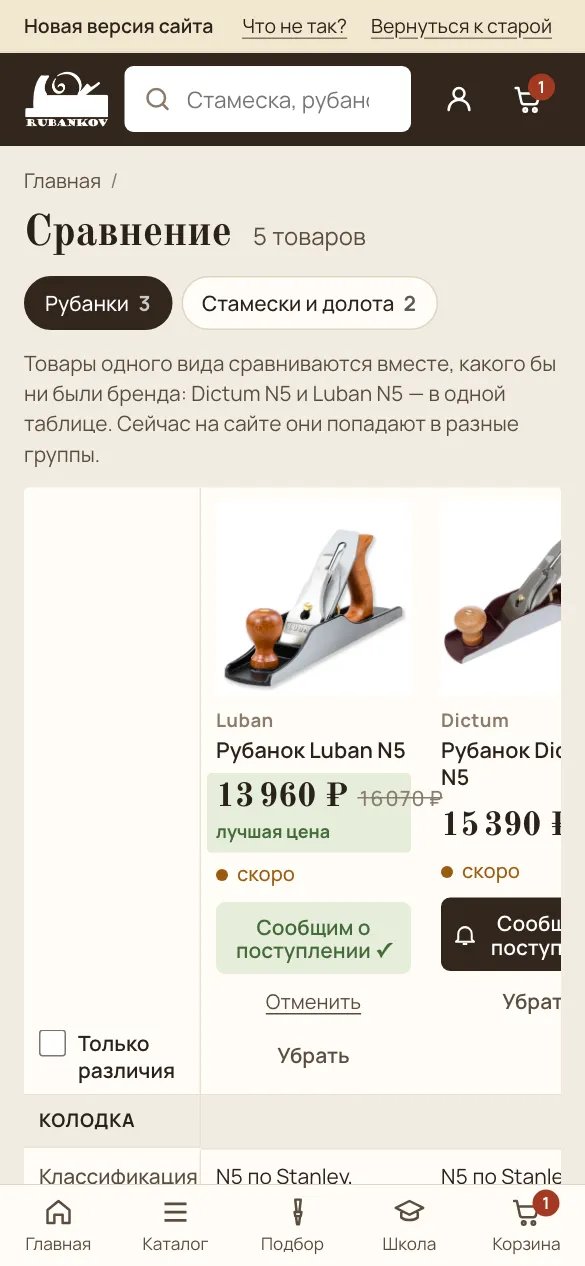
Products of one kind are compared together — Luban N5 next to Dictum N5 — with an option to show differences only. Favourites show stock, “Add everything available to cart” and “Share the list”.
Choosing between two planes takes one table.
Cart and account
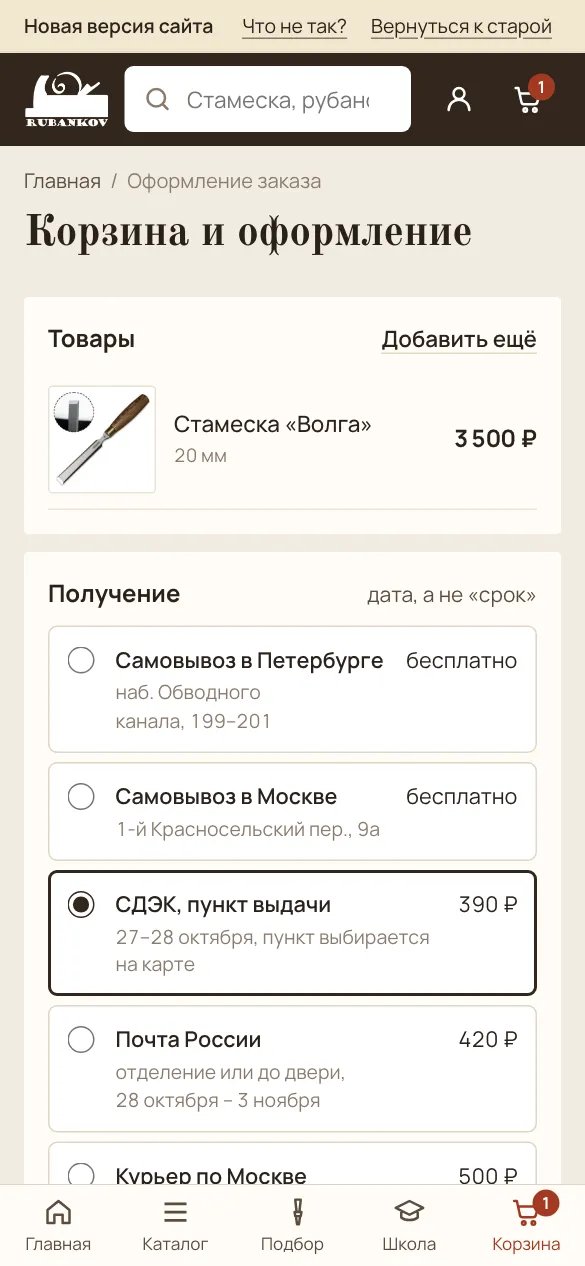
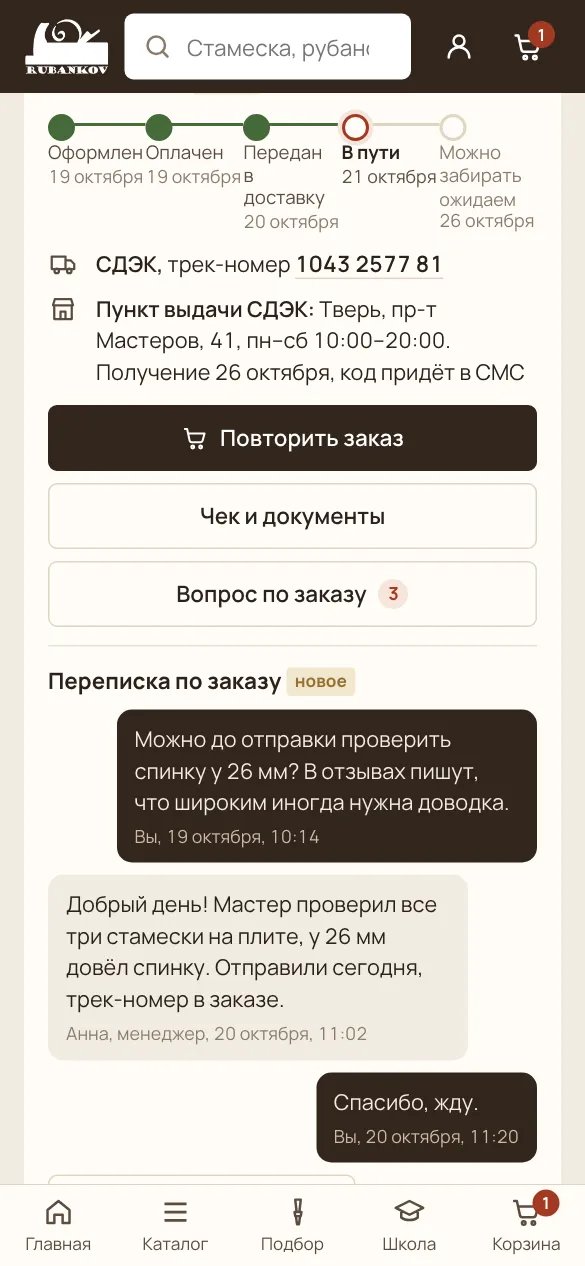
Delivery shows “a date, not a lead time”: pick-up, CDEK, Russian Post and courier each with its date and price. The account has order steps, tracking, the receipt, a chat with the manager and “Repeat order”.
“Where is my order?” is answered without a phone call.
School and courses
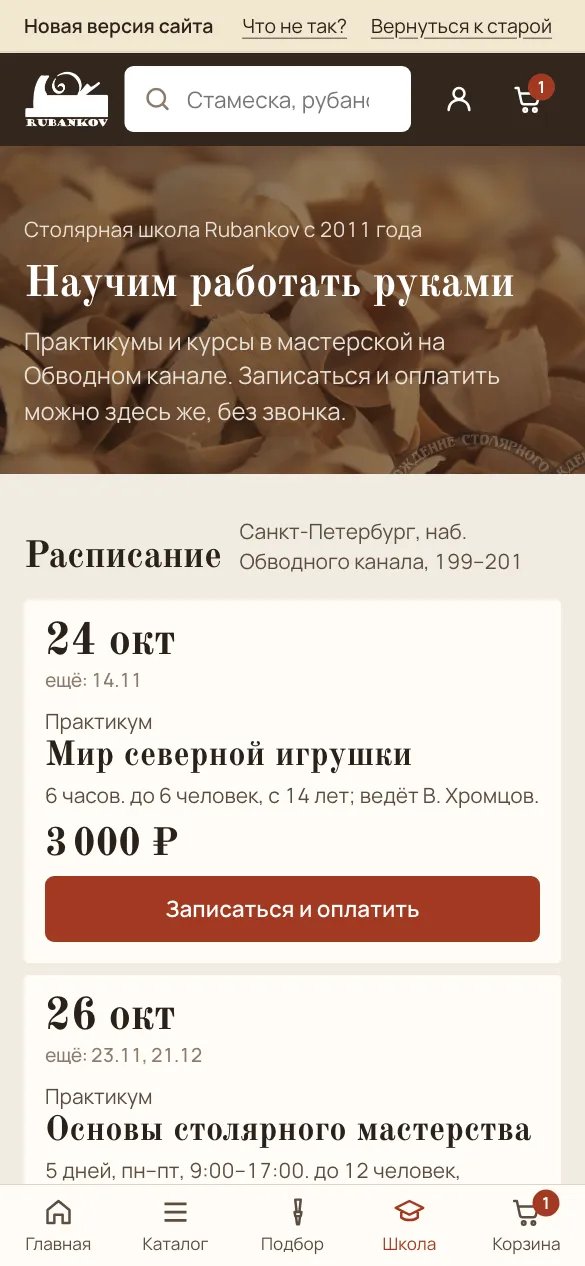
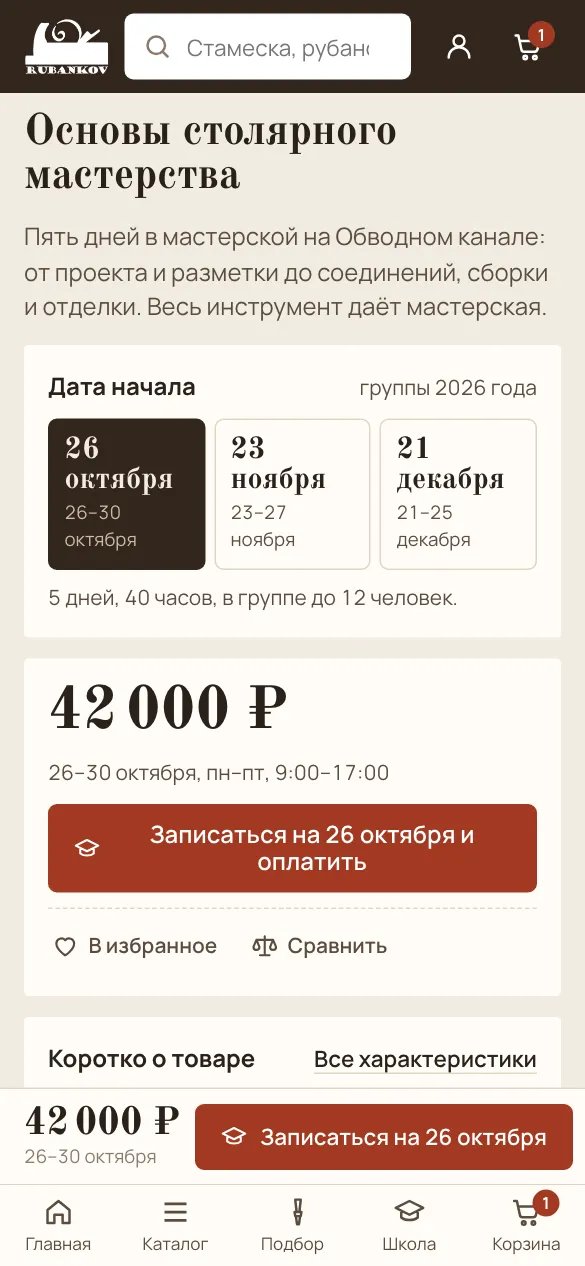
A workshop schedule with online sign-up and payment; a course shows its dates as buttons and one “Sign up for 26 October and pay” button; e-tickets for the festival instead of the box office at the door.
Signing up and paying take no phone call.
Gifts
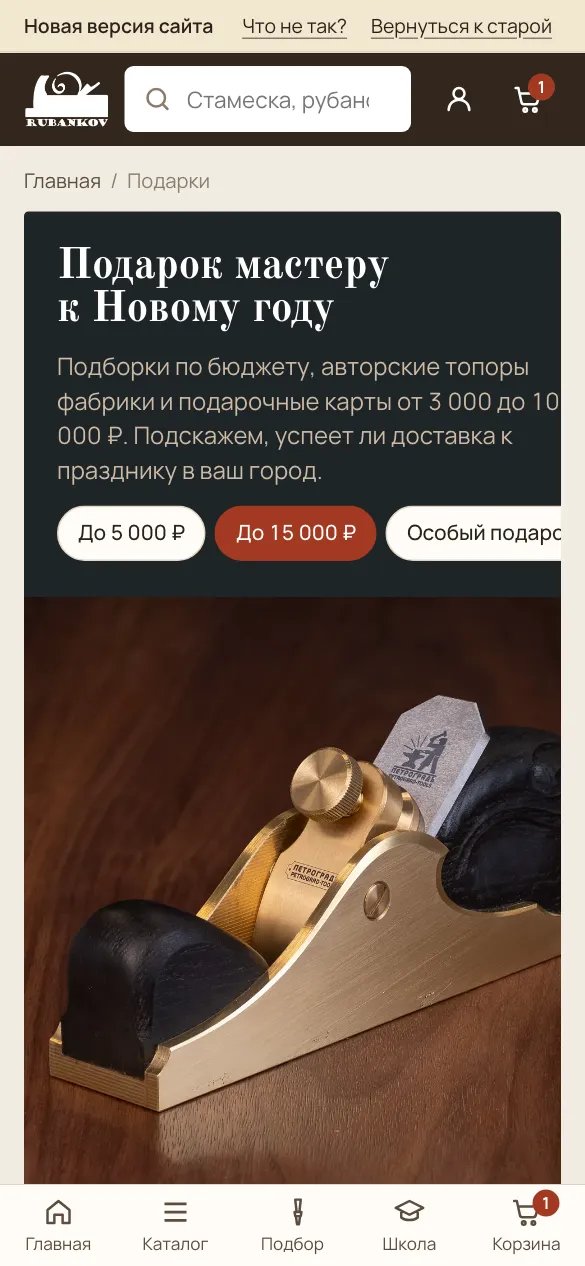
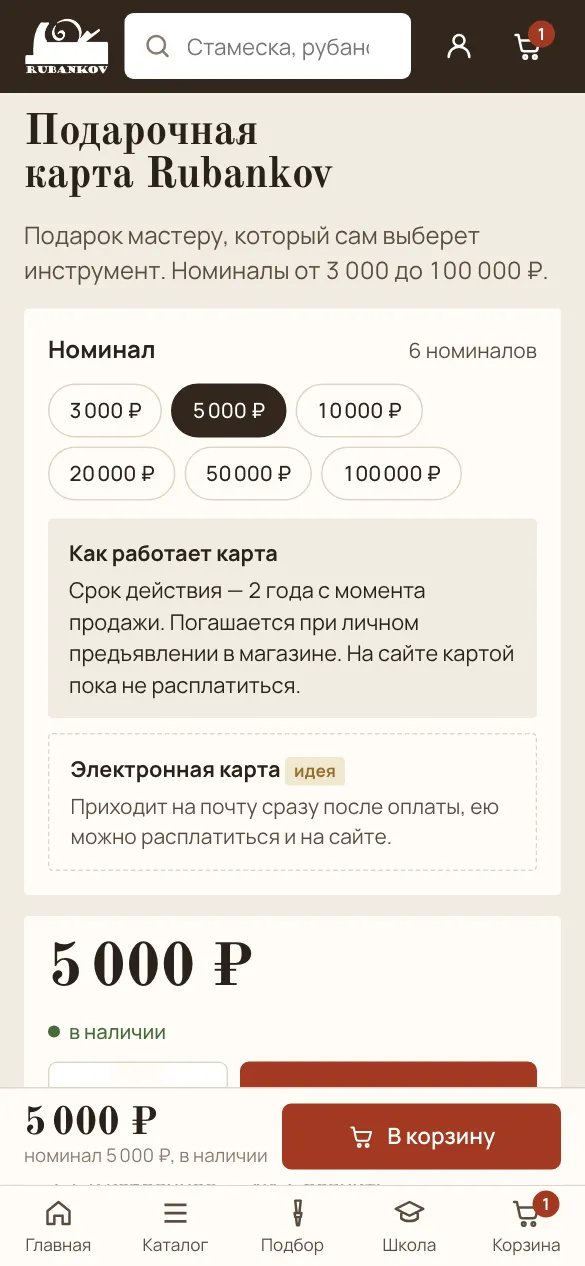
Picks by budget and the factory's signature axes, with a hint whether delivery makes it before the holiday. The gift card has all denominations on one card instead of six products, plus an e-card sent by e-mail.
Even someone who knows nothing about tools can pick a gift for a craftsman.
Petrograd factory storefront
A separate factory storefront on the same components: its own look and maker's mark, series, a dealer map and a wholesale portal.
The factory gets its own site without separate development.
Two palettes and a soft launch
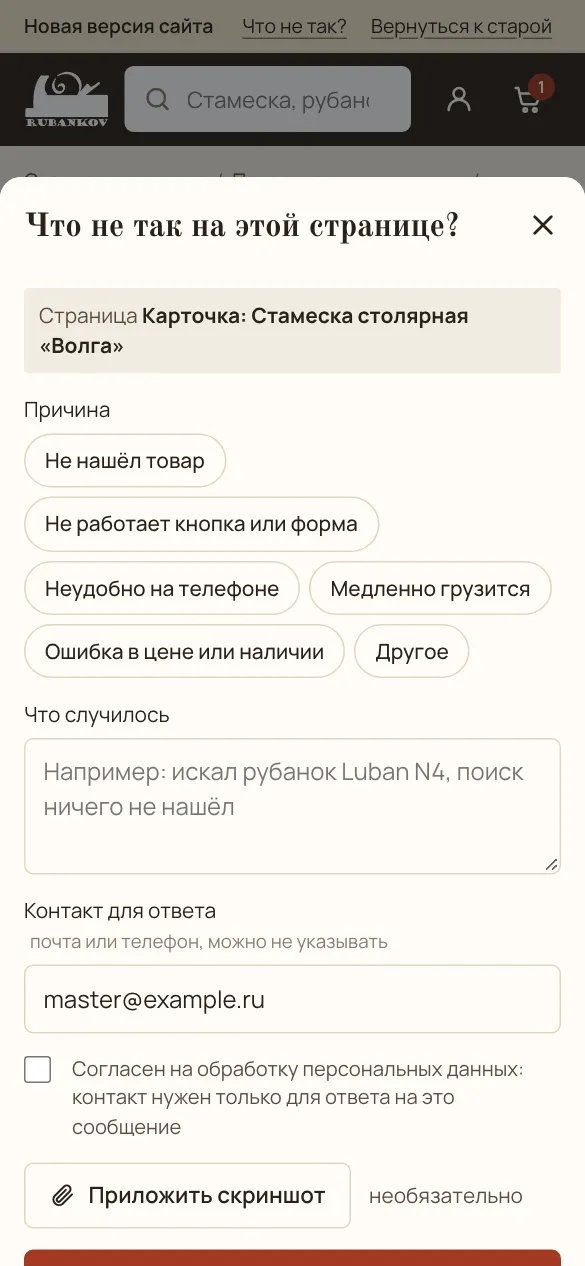
The familiar red and graphite or the warm “Workshop” palette, switched with one button. The new storefront launches next to the old one: a “New version” banner, “Back to the old site” and a “What's wrong?” form on every page, with a reason and a screenshot.
An update with no risk to sales, and the shop hears about problems from customers themselves.